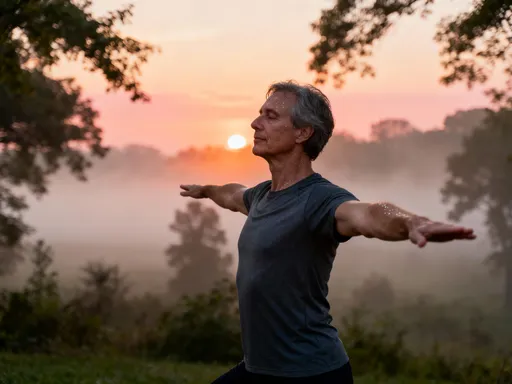
Why I Finally Got Stronger Without Hitting the Gym
For years, I thought real progress in fitness only happened with heavy weights and sweat-drenched workouts. But after constant burnout, I stepped back and rebuilt my routine from the ground up—no gym required. What changed? A smarter, sustainable approach focused on movement I actually enjoyed. This isn’t about extreme workouts; it’s about consistency, body awareness, and small wins that add up. If you’ve ever quit a fitness plan, this one might finally stick.
The Burnout Problem: Why Traditional Workouts Fail
Many people begin their fitness journey with high hopes, only to find themselves disengaged within weeks. The initial enthusiasm often fades when routines become rigid, demanding, and disconnected from daily life. Traditional gym-centric fitness plans frequently rely on intense, time-consuming workouts that prioritize performance over sustainability. While these programs may yield short-term results, they often lead to physical exhaustion and mental fatigue, making long-term adherence difficult. For many, especially women balancing work, family, and personal responsibilities, the pressure to maintain such a regimen becomes another source of stress rather than relief.
Research in behavioral science consistently shows that motivation alone is not enough to sustain healthy habits. Instead, long-term success depends on designing routines that align with lifestyle, energy levels, and personal preferences. When exercise feels like a chore or punishment, the brain naturally resists it. This resistance is not a failure of willpower but a signal that the approach needs adjustment. The problem is not the desire to be healthier—it’s the method used to get there. High-intensity workouts, while effective for some, are not universally sustainable. They often overlook the importance of recovery, enjoyment, and gradual progress.
Another common pitfall is setting unrealistic expectations. Many believe that to see results, they must work out for an hour every day, lift heavy weights, or follow strict diets. When life gets busy, even missing one session can trigger feelings of guilt or failure, leading to complete abandonment of the routine. This all-or-nothing mindset undermines progress and reinforces negative associations with fitness. The solution lies in shifting the focus from intensity to consistency. Rather than asking how hard you can push, the better question is: how can you move your body regularly in ways that feel good and fit into your life?
By recognizing that fitness is not a one-size-fits-all journey, we open the door to more flexible, compassionate approaches. The goal is not to endure grueling workouts but to cultivate a lasting relationship with movement. This means honoring rest days, listening to your body, and choosing activities that bring energy rather than drain it. When fitness becomes something you look forward to—not dread—it transforms from a burden into a form of self-care. And that shift, more than any single workout, is what leads to lasting change.
Rethinking Fitness: Movement Over Metrics
Fitness has long been associated with measurable outputs: calories burned, miles run, reps completed. While tracking can be motivating for some, it often creates an unhealthy obsession with numbers rather than how one feels. This narrow focus can make people overlook the value of everyday movement—walking to the mailbox, gardening, playing with children, or simply standing up regularly throughout the day. These small actions, when accumulated, contribute significantly to overall health and vitality.
The concept of Non-Exercise Activity Thermogenesis (NEAT) highlights how essential these daily movements are. NEAT refers to the calories burned through all physical activities that are not formal exercise, including fidgeting, standing, walking, and household chores. Studies suggest that NEAT can vary by up to 2,000 calories per day between individuals, playing a major role in metabolic health and weight management. Unlike structured workouts, which may happen only a few times a week, NEAT is something that can be improved every day, regardless of fitness level or schedule.
Shifting the focus from performance to habit changes the entire relationship with physical activity. Instead of asking, “Did I burn enough calories today?” a more empowering question is, “Did I move my body in a way that felt good?” This mindset encourages awareness, not judgment. It allows room for flexibility—on low-energy days, a short walk may be enough. On busy days, standing while making phone calls or doing calf raises while washing dishes can still count. The goal is not perfection but regular engagement with movement.
When fitness is redefined as consistent, enjoyable motion rather than intense, scheduled workouts, it becomes more accessible. You don’t need a gym membership, special clothes, or even a full hour. What matters is the frequency and intention behind your actions. Over time, these small choices build momentum. A daily 10-minute walk turns into 15, then 20. Stretching after waking becomes a non-negotiable part of the morning. These habits, though modest at first, create a foundation for long-term strength, mobility, and energy. And because they’re integrated into life, they’re far more likely to last.
Building a Real-World Routine: The 4-Part Framework
Sustainable fitness doesn’t require complex routines or expensive equipment. Instead, it thrives on structure, simplicity, and adaptability. A practical, science-backed approach includes four essential components: daily mobility, strength work, cardiovascular movement, and recovery. Each plays a unique role in supporting overall health, and all can be customized to fit different lifestyles, time constraints, and energy levels.
Daily mobility refers to movements that maintain joint health, improve posture, and prevent stiffness. This includes gentle stretching, dynamic warm-ups, or practices like yoga or tai chi. Just 5–10 minutes each morning can enhance circulation, reduce muscle tension, and prepare the body for daily activities. For women managing household responsibilities, mobility exercises can be done while waiting for coffee to brew or during commercial breaks while watching TV. The key is consistency, not duration.
Strength work is essential for maintaining muscle mass, supporting bone density, and improving metabolic function. Contrary to popular belief, strength training does not require weights or machines. Bodyweight exercises such as squats, lunges, push-ups, and planks are highly effective when performed with proper form and progression. These movements build functional strength—the kind that makes lifting groceries, climbing stairs, or playing with children easier and safer. A short 15-minute session three to four times a week can yield significant benefits over time.
Cardiovascular movement supports heart health, lung capacity, and energy levels. While running or cycling may come to mind, even brisk walking qualifies as effective cardio when done consistently. The American Heart Association recommends at least 150 minutes of moderate-intensity aerobic activity per week, which can be broken into 20–30 minute segments. Walking the dog, parking farther from store entrances, or taking a post-dinner stroll all contribute to this goal. The best cardio is the kind you’ll actually do regularly.
Finally, recovery is not a luxury—it’s a necessity. This includes quality sleep, hydration, and active recovery such as light walking, stretching, or foam rolling on rest days. Recovery allows muscles to repair, reduces inflammation, and prevents burnout. Ignoring this component increases the risk of injury and fatigue, undermining long-term progress. By treating recovery as a core part of the routine, not an afterthought, you create a balanced, sustainable approach to fitness.
Strength Without Weights: Bodyweight Training That Works
Many believe that building strength requires lifting heavy weights in a gym. However, bodyweight training offers a powerful, accessible alternative that can be done anywhere, anytime. Exercises like squats, push-ups, lunges, and planks use your own body as resistance, effectively building muscle and improving endurance. The key to progress lies in the principle of progressive overload—gradually increasing the challenge to continue making gains.
Progressive overload doesn’t require more weight; it can be achieved through technique adjustments. For example, slowing down the tempo of a squat increases time under tension, making the exercise more demanding. Adding repetitions, reducing rest time, or modifying the angle—such as elevating the feet during a push-up—can also intensify the workout. These small changes keep the body adapting without the need for equipment.
For beginners, starting with modified versions ensures proper form and reduces the risk of injury. A wall push-up or chair-assisted squat allows someone new to strength training to build confidence and muscle memory. As strength improves, they can progress to full-range movements. A sample beginner routine might include 2 sets of 10 bodyweight squats, 8 modified push-ups, 10 forward lunges per leg, and a 20-second plank, performed three times a week.
Intermediate exercisers can increase volume and complexity. A sample session might include 3 sets of 15 squats, 10 full push-ups, 12 reverse lunges per leg, 15 glute bridges, and a 30-second side plank on each side. Adding dynamic movements like step-ups or mountain climbers further enhances cardiovascular and muscular benefits. The focus remains on control, alignment, and breathing—qualities that improve not only physical strength but also body awareness.
One of the greatest advantages of bodyweight training is its functional nature. Unlike isolated gym machines, these exercises engage multiple muscle groups simultaneously, mimicking real-life movements. This improves balance, coordination, and core stability—qualities that become increasingly important with age. By building strength in a practical, integrated way, bodyweight training supports independence and confidence in daily life.
The Hidden Power of Walking and Active Recovery
Walking is one of the most underrated forms of exercise, yet it is scientifically supported as a cornerstone of long-term health. It is low-impact, accessible, and easy to sustain across all fitness levels. Regular walking has been shown to improve cardiovascular function, support healthy blood pressure, enhance mood through increased endorphin release, and aid in weight management. Unlike high-intensity workouts that may be abandoned due to fatigue or injury, walking is something most people can maintain for years.
The benefits of walking extend beyond physical health. Time spent outdoors, even in urban environments, can reduce stress and improve mental clarity. A daily walk provides a mental reset—space to reflect, decompress, or simply enjoy nature. For women juggling multiple roles, this quiet time can be a form of emotional restoration. Whether it’s a morning stroll before the household wakes or an evening walk after dinner, these moments contribute to overall well-being.
Active recovery is another often-overlooked component of fitness. On rest days, complete inactivity can lead to stiffness and soreness. Light movement, such as walking, gentle stretching, or yoga, promotes blood flow to muscles, helping them repair more efficiently. This reduces delayed onset muscle soreness (DOMS) and keeps the body feeling agile. Active recovery also reinforces the habit of movement without adding stress, making it easier to return to more intense sessions when ready.
Incorporating walking into daily life doesn’t require extra time. Simple choices—taking the stairs, parking farther away, walking during phone calls, or scheduling walking meetings—add up. Pedometer studies show that increasing daily steps from 5,000 to 7,000 or more correlates with measurable improvements in health markers. The goal is not to reach an arbitrary number but to move more consistently. Over time, walking becomes less of a workout and more of a natural rhythm of life.
Making It Stick: Habit Stacking and Environment Design
Lasting change rarely comes from willpower alone. Research in habit formation shows that behavior is more likely to stick when it’s tied to existing routines and supported by an enabling environment. Two powerful strategies—habit stacking and environment design—can transform movement from an effortful task into an effortless part of daily life.
Habit stacking involves linking a new behavior to an already established one. For example, doing five squats while brushing your teeth, stretching for two minutes after brewing coffee, or performing calf raises while waiting for the microwave creates natural triggers for movement. These micro-workouts take less than a minute but build consistency over time. Because they’re attached to habits already embedded in your routine, they require little additional effort or decision-making.
Environment design focuses on reducing friction and increasing cues for desired behaviors. If resistance bands are left on the kitchen counter, they’re more likely to be used. If walking shoes are placed by the front door, a spontaneous walk becomes easier to start. Conversely, removing barriers—such as storing workout clothes in a hard-to-reach closet—can silently sabotage intentions. By shaping your surroundings to support movement, you make healthy choices the default, not the exception.
These strategies are especially effective for those with limited time or fluctuating energy levels. On days when motivation is low, having a system in place ensures that some movement still happens. Even five minutes of stretching or a short walk around the block maintains the habit loop. Over time, these small actions reinforce identity: you begin to see yourself as someone who moves regularly, regardless of circumstances. That shift in self-perception is what makes change sustainable.
Tracking Progress Beyond the Scale
For many, fitness success is measured by the number on the scale. However, weight is an incomplete and often misleading indicator of health. It doesn’t distinguish between muscle and fat, nor does it reflect improvements in energy, strength, or mood. Relying solely on the scale can lead to frustration, especially when physical changes aren’t immediately visible. A more holistic approach to progress tracking offers a clearer, more encouraging picture of success.
Better sleep, increased stamina, improved posture, and easier movement in daily tasks are all meaningful signs of progress. Do stairs feel less taxing? Can you carry groceries without needing to stop? Are you waking up with more energy? These real-life improvements reflect functional fitness—the kind that enhances quality of life. Noticing and celebrating these subtle wins builds confidence and reinforces motivation.
Other non-scale victories include improved mental clarity, reduced stress, and greater body awareness. Many women report feeling stronger, more capable, and more in tune with their bodies after adopting a consistent movement practice. These changes, though intangible, are deeply valuable. They reflect a shift from striving for appearance-based goals to nurturing overall well-being.
Journaling or using a simple checklist can help track these indicators. Recording how you feel each week—energy levels, mood, physical comfort—creates a record of progress that numbers alone can’t capture. This self-awareness fosters a compassionate, long-term mindset. Fitness is no longer a temporary project but a lifelong commitment to feeling your best. When movement is rooted in self-respect rather than self-criticism, it becomes sustainable, enjoyable, and deeply rewarding.